In 2025, CDC worked alongside countries and partners to advance global health and strengthen essential core public health capabilities.
Why Global Health Is Key to U.S. Health Security
In 2025, global health threats moved faster than ever and remain a critical concern. Increased travel, humanitarian crises and instability, and evolving pathogens allow outbreaks to spread across borders in days or even hours. Protecting Americans requires stopping threats early, wherever they emerge.
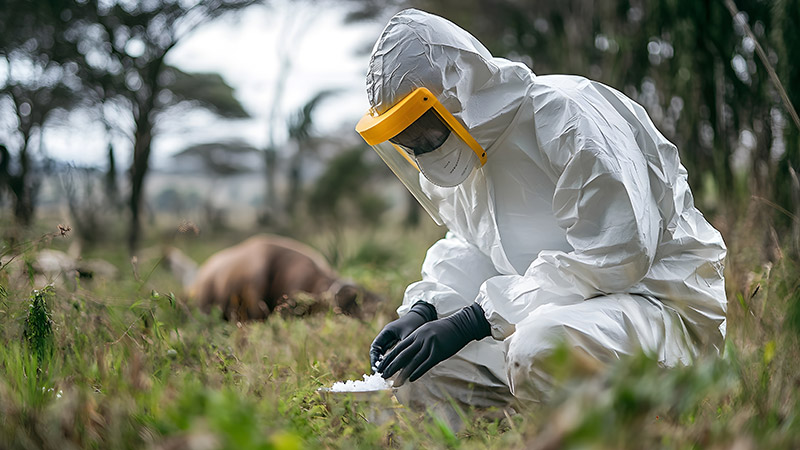
Every day, CDC's global health experts are on the frontlines, helping to stop outbreaks before they spread to the United States. This is American-led global health security in action, keeping Americans safe.
With on-the-ground experts in more than 60 countries, CDC works with Ministries of Health, laboratories, and frontline responders to detect outbreaks earlier and respond faster. This global network allows CDC to identify risks at their source, share real-time information, and contain health threats before they impact Americans.
Preventing threats abroad protects communities at home. In a connected world, diseases can spread rapidly, affecting travel, trade, and everyday life. CDC's global surveillance and laboratory systems inform U.S. risk assessments, guide traveler recommendations, and support country-led decisions. Acting early reduces the likelihood that emerging threats reach U.S. communities. When health threats emerge, CDC is the first call, trusted for its expertise, global presence, and ability to act quickly.
Keep in mind
CDC's global work serves as America's first line of defense.
Data & Surveillance
Event-based surveillance
30+
global health threats monitored each day through CDC's event-based surveillance system in 2024
Respiratory diseases
120+
countries working with CDC to monitor for increases in – or variants of – respiratory diseases
Laboratory
Pathogen detection
190
countries working with CDC to strengthen laboratory detection of vaccine-preventable diseases and emerging pathogens
Molecular testing
1800+
laboratories and clinical sites working with CDC to strengthen molecular testing capacity for HIV, TB, and other diseases
Lab leadership
41
countries applying CDC training and resources to empower
laboratory leadership and strengthen national public health laboratories
Workforce & Institutions
Disease detectives
182
CDC-trained
disease detectives responding to Rwanda's first-ever Marburg virus outbreak
Emergency responders
3200+
CDC experts trained and ready to engage in domestic and international
emergency responses
Prevention & Response
Vaccine-preventable outbreaks
44
countries assisted by CDC
immunization experts to respond to outbreaks of vaccine-preventable diseases, including measles
7-1-7 approach
26
countries working with CDC to identify barriers and solutions to ensure outbreaks can be detected in less than 7 days, reported in 1 day, and responded to within 7 days, using the
7-1-7 approach
Readiness and response skills
11,000+
country staff trained by CDC in 2024 on readiness and response capabilities like field epidemiology, infection prevention and control, serology, and disease surveillance
Innovation & Research
Wastewater surveillance
3
global regions collaborating with CDC to scale up
wastewater and environmental surveillance platforms for early outbreak warning
Malaria vaccines
20
countries in Africa planning for roll out of
malaria vaccines developed in partnership with CDC
Policy, Communications, & Diplomacy
HIV resources
1,000
partners in 105 countries using CDC's U=U resource guide to promote consistent HIV treatment that helps stop the spread
Legal preparedness
~560
public health officials trained on international
public health law and methods for enhancing legal preparedness across CDC, regional, and partner networks
Global Health Security
100
countries around the world working in partnership with CDC and the U.S. through the U.S. Global Health Security Strategy