


Key points
- Inflammatory bowel disease (IBD) affects about 2.4-3.1 million people in the United States, with rates varying by age, race, and ethnicity.
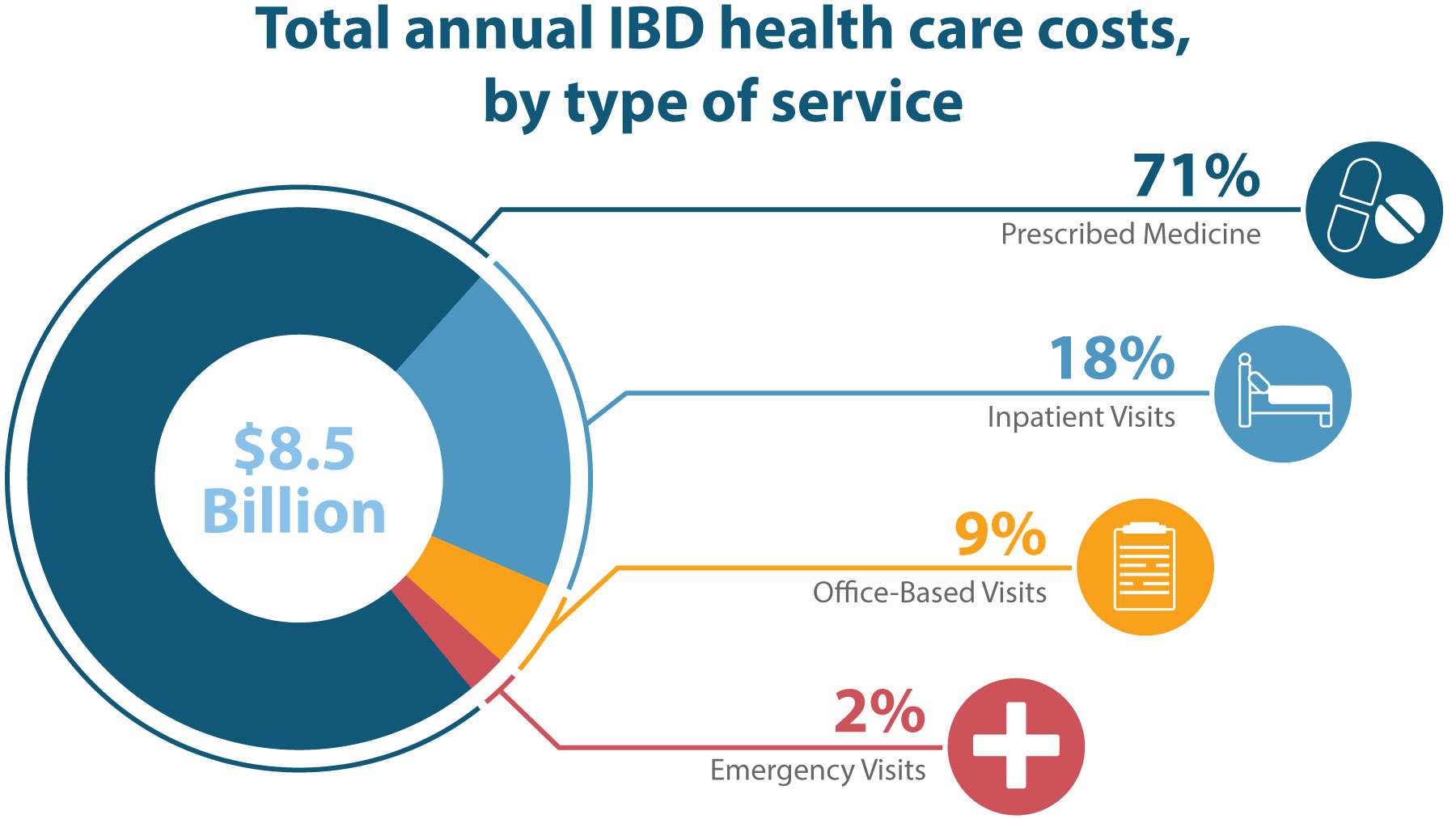
- In 2018, the total annual U.S. health care costs for IBD were about $8.5 billion
- Compared to those without, people with IBD are more likely to have other chronic conditions, smoked in the past, experienced psychological distress, and fall short of recommended sleep or physical activity.
- Biologic prescription drugs have shifted the patterns of cost and service use.

The basics
Inflammatory bowel disease (IBD) refers to a group of life-long diseases affecting the intestines. The main types of IBD are ulcerative colitis and Crohn's disease.
Differences across groups
Racial and ethnic groups
Prevalence rates for IBD are consistently highest among non-Hispanic White populations, compared to Black, Hispanic, and Asian populations in the United States. 1245
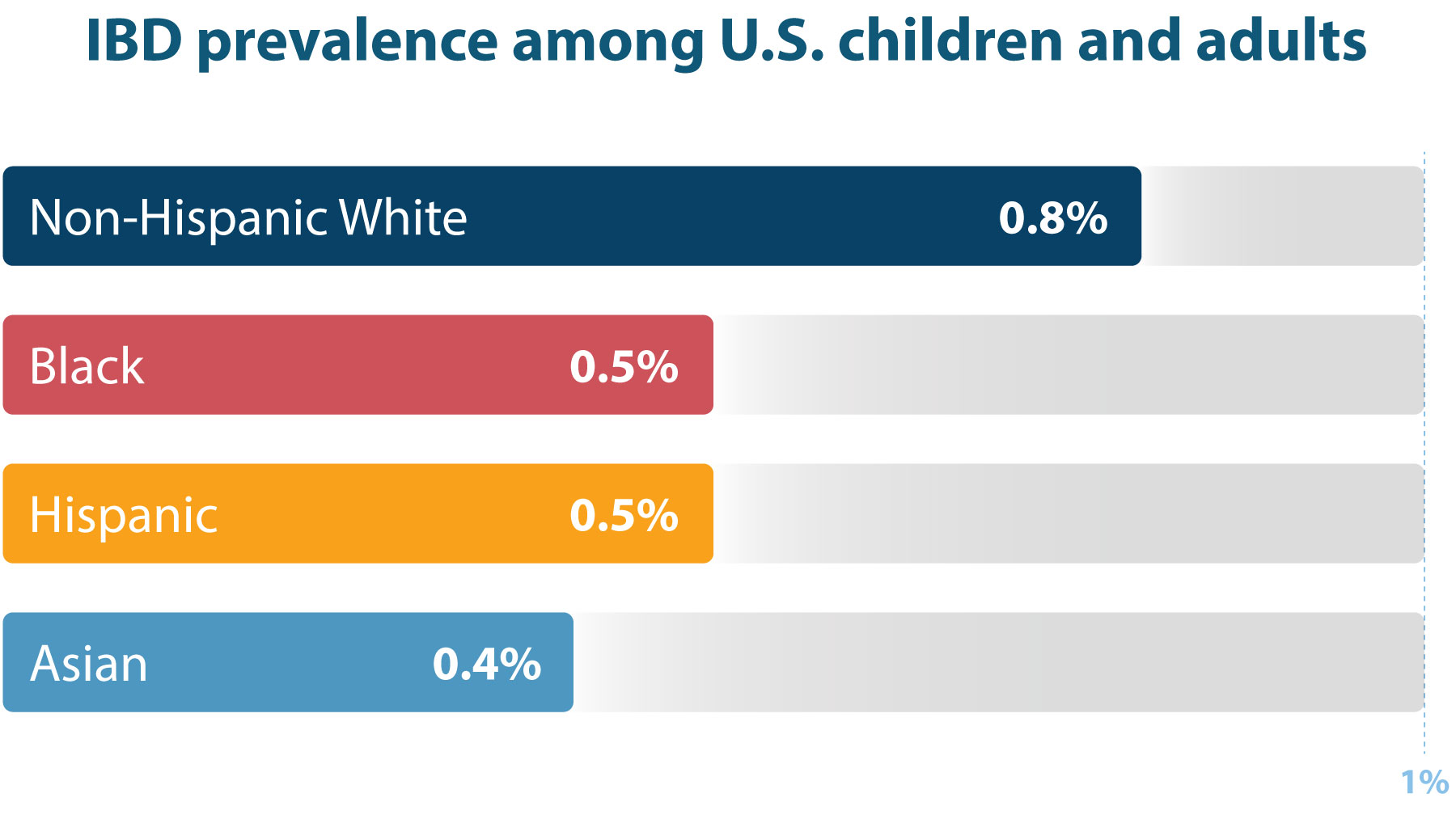
Prevalence is consistently highest among Non-Hispanic White populations. However, the gap is shrinking, as studies find increasing prevalence among racial and ethnic minority groups.456
Older age groups
IBD prevalence increases with increasing age, with the highest prevalence among adults aged 45 years and older.712
Prevalence across health risk behaviors and conditions
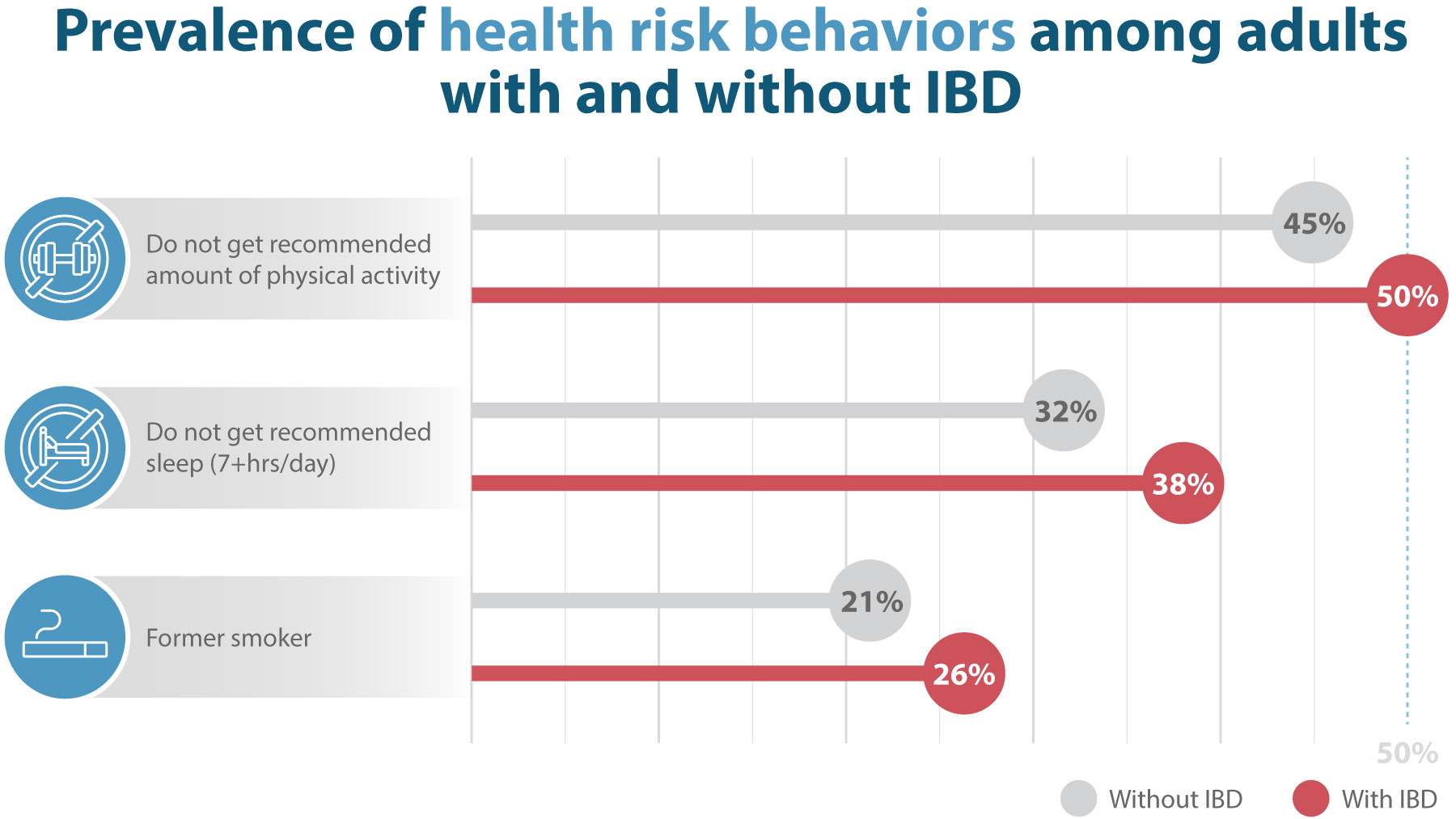
Compared to adults without IBD, adults with IBD are more likely to:2
- Fall short of aerobic and muscle-strengthening physical activity guidelines.
- Sleep less than 7 hours a day.
- Be a former smoker.
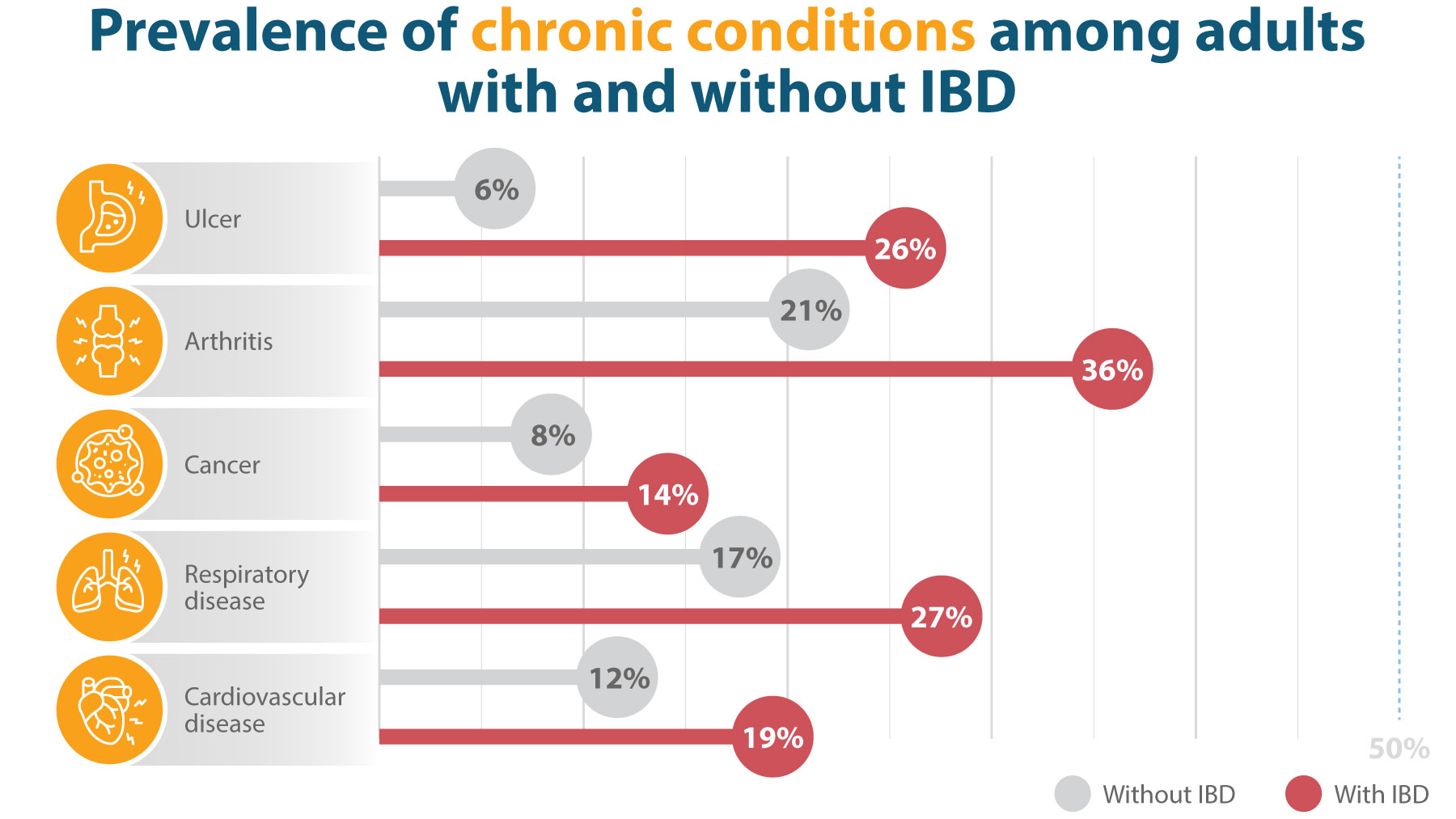
Adults with IBD were also more likely to have:2
- Other chronic conditions, including ulcers, arthritis, cancer, respiratory disease, and cardiovascular disease.
- Experienced serious psychological distress.
IBD health care costs
The cost of IBD care is rising in the United States.8910
A recent study estimated the total overall costs for IBD-related care were $8.5 billion in 2018. Prescribed medicines accounted for the majority of costs, followed by inpatient visits, office-based visits, and emergency care visits.11
Effective but highly priced biologic medications have improved IBD outcomes and rates of remission. But they have also affected health care costs and changed the frequency that different types of services are used.8910121314
- Lewis JD, Parlett LE, Jonsson Funk ML, et al. Incidence, prevalence, and racial and ethnic distribution of inflammatory bowel disease in the United States. Gastroenterology. 2023;165(5):1197–1205.e2. doi:10.1053/j.gastro.2023.07.003
- Xu F, Dahlhamer JM, Zammitti EP, Wheaton AG, Croft JB. Health-risk behaviors and chronic conditions among adults with inflammatory bowel disease — United States, 2015 and 2016. MMWR Morb Mortal Wkly Rep. 2018;67:190–195. doi.org/10.15585/mmwr.mm6706a4
- Dahlhamer JM, Zammitti EP, Ward BW, Wheaton AG, Croft JB. Prevalence of inflammatory bowel disease among adults aged ≥18 Years — United States, 2015. MMWR Morb Mortal Wkly Rep. 2016;65(42):1166-1169. doi:10.15585/mmwr.mm6542a3
- Barnes EL, Nowell WB, Venkatachalam S, Dobes A, Kappelman MD. Racial and ethnic distribution of inflammatory bowel disease in the United States. Inflamm Bowel Dis. 2022;28(7):983-987. doi:10.1093/ibd/izab219
- Afzali A, Cross RK. Racial and ethnic minorities with inflammatory bowel disease in the United States: a systematic review of disease characteristics and differences. Inflamm Bowel Dis. 2016;22(8):2023–2040. doi:10.1097/MIB.0000000000000835
- Xu F, Carlson SA, Liu Y, Greenlund KJ. Prevalence of inflammatory bowel disease among Medicare fee-for-service beneficiaries — United States, 2001–2018. MMWR Morb Mortal Wkly Rep. 2021;70(19):698–701. doi:10.15585/mmwr.mm7019a2
- Ye Y, Manne S, Treem WR, Bennett D. Prevalence of inflammatory bowel disease in pediatric and adult populations: recent estimates from large national databases in the United States, 2007–2016. Inflamm Bowel Dis. 2019;26(4):619–625. doi:10.1093/ibd/izz182
- Ma C, Smith MK, Guizzetti L, et al. Assessing national trends and disparities in ambulatory, emergency department, and inpatient visits for inflammatory bowel disease in the United States (2005–2016). Clin Gastroenterol Hepatol. 2020;18(11):2500–2509.e1. doi:10.1016/j.cgh.2020.01.023
- Singh S, Qian AS, Nguyen NH, et al. Trends in U.S. health care spending on inflammatory bowel diseases, 1996–2016. Inflamm Bowel Dis. 2022;28(3):364–372. doi:10.1093/ibd/izab074
- Click B, Lopez R, Arrigain S, Schold J, Regueiro M, Rizk M. Shifting cost-drivers of health care expenditures in inflammatory bowel disease. Inflamm Bowel Dis. 2020;26(8):1268–1275. doi:10.1093/ibd/izz256
- Peery AF, Crockett SD, Murphy CC, et al. Burden and cost of gastrointestinal, liver, and pancreatic diseases in the United States: update 2021. Gastroenterology. 2022;162(2):621–644. doi:10.1053/j.gastro.2021.10.017
- Berg DR, Colombel J-F, Ungaro R. The role of early biologic therapy in inflammatory bowel disease. Inflamm Bowel Dis. 2019;25(12):1896–1905. doi:10.1093/ibd/izz059
- Buchner AM, Schneider Y, Lichtenstein GR. Biosimilars in inflammatory bowel disease. Am J Gastroenterol. 2021;116(1):45-56. doi:10.14309/ajg.0000000000000844
- El-Matary W, Kuenzig ME, Singh H, et al. Disease-associated costs in children with inflammatory bowel disease: a systematic review. Inflamm Bowel Dis. 2020;26(2):206-215. doi:10.1093/ibd/izz120